
If you’ve submitted a paper, you’ve likely felt the squeeze: journal fees are intricate, variable, and too often opaque before submission, and this is a bigger issue now funding is uncertain! Between APCs, page/figure charges, and open‑access surcharges—not to mention shifting waiver policies—planning a submission can feel like budgeting with a blindfold on.
I built Mendelity to remove that blindfold.
What Mendelity is
A free, lightweight website that centralizes practical information researchers need before they pick a target journal:
Publication costs (APCs and other common fees)
Open‑access options and policies
Impact metrics for quick benchmarking
Sort/filter tools and an interactive scatter to visualize trade‑offs
The goal isn’t to tell you where to publish—it’s to make it far easier to budget, prioritize, and defend your choice to collaborators, trainees, and administrators. I parsed the data and vibe-coded the web app. Tell me what you think!
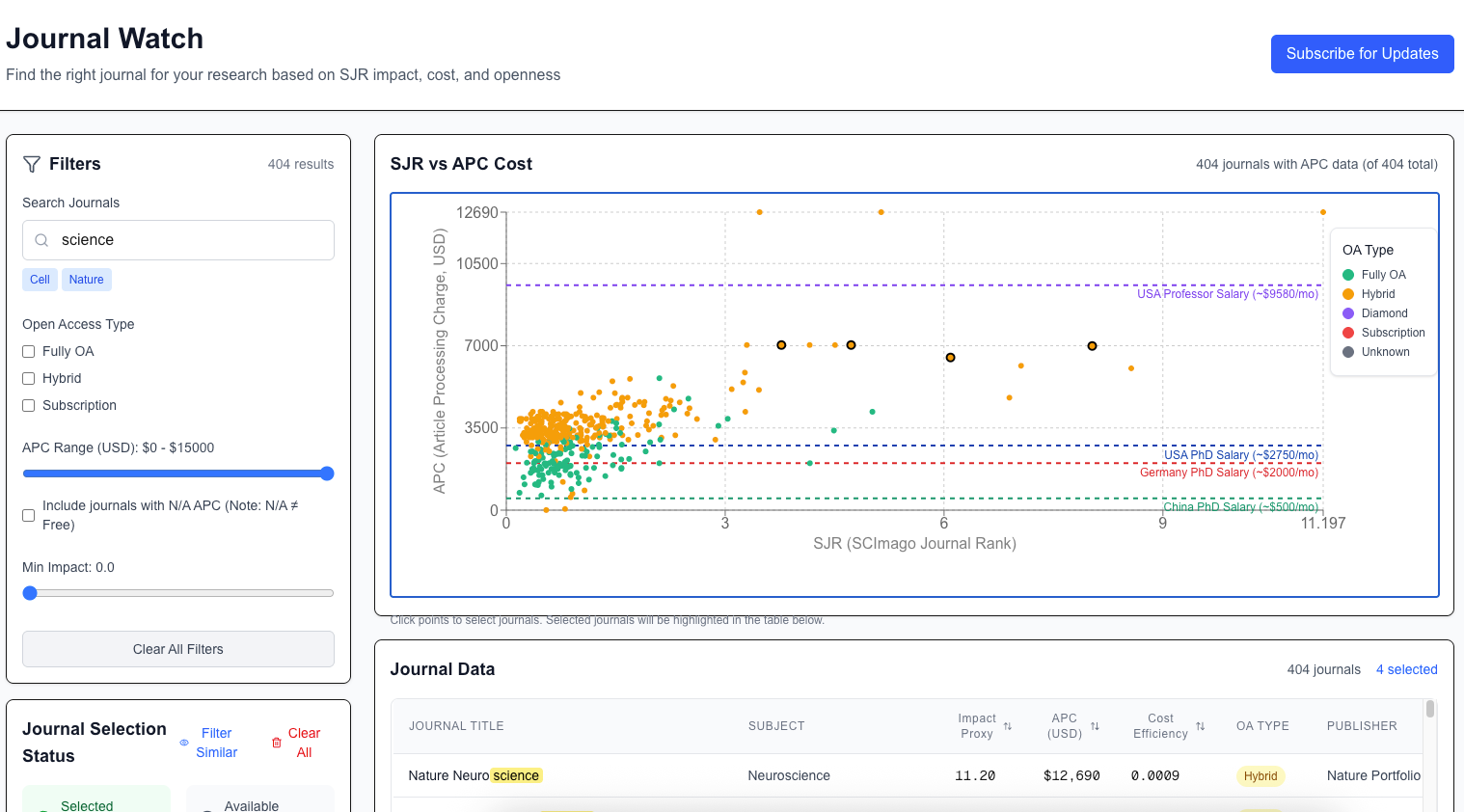
Why journal fees feel so high (and confusing)
A few structural forces keep costs elevated and terms complex:
Prestige premiums and limited substitutes. Journals aren’t interchangeable; brand and audience concentrate demand.
Cross‑subsidies and legacy workflows. Editorial management, platform costs, and services vary widely and are bundled differently across publishers. Transformative agreements, OA mandates, waivers, and discount programs create a maze of if‑this‑then‑that pricing.
Information fragmentation. Key details live across multiple pages and PDFs; labs rarely have a single, reliable view when deciding.
When funding is uncertain, this combination can lead to missed opportunities, budget surprises, or unnecessary delays. I hope the transparency brought by Mendelity can help increase competition & lower pricing in the free market.
Who this helps
PIs and lab managers drafting budgets or planning OA compliance
Trainees choosing realistic target journals for first‑author papers
Department admins and research offices advising across many fields
How you can help
Kick the tires: https://mendelity.com/
Share your feedback here in the substack
Share with your network
Better transparency won’t fix every problem in scholarly communication, but it can save time, prevent budget surprises, and let scientists focus on the work that matters. If this is useful to you or your trainees, I’d love your feedback—and suggestions for what to add next.
Relevant RFI from the NIH: https://grants.nih.gov/grants/guide/notice-files/NOT-OD-25-138.html